Wednesday, March 19, 2014

Be Brave... and Take a Simple Action

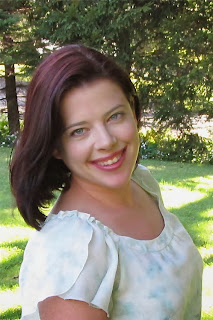
The first time I heard Chloe Temtchine sing was on Nov. 12, 2013. It was at the inaugural O2 breathe Gala, hosted by PHA’s Greater New York and Philadelphia Chapter. The performance was quite impressive. Chloe’s talents are great and so is her spirit, and now she is asking all of us to take a simple action to further the PH cause. I’d like to tell you how you can help.

Diagnosed in March 2013 with a rare form of pulmonary hypertension (pulmonary vascular occlusive disease, PVOD), Chloe almost immediately began fighting back. She uses her great performing skills to help fight for awareness, and she also uses her humor. As she introduces her band, she also introduces her necktie-wearing oxygen tank as Steve Martin.


Now Chloe is turning her amazing song of inspiration, “Be Brave,” into an opportunity for PH awareness.

For the past several weeks, she has been talking on camera to some very special patients and family members, including Anna Volino and Anne Sperando, about what it means to be brave. Their stories are powerful.

Working together, PHA and Chloe and her husband Marvin are taking action to increase PH awareness.

On March 29, we are asking that EVERYONE go to the iTunes store and download “Be Brave.” The cost is 99 cents, half of which will go to PHA. But the reason to take this action is much, much more important. When many downloads happen in a short period of time, iTunes gives the song and the performer much more visibility… and that visibility will translate to press and awareness.

So mark your calendar to download “Be Brave” by Chloe Temtchine on Saturday, March 29. Tell your family, tell your friends.  It’s a great song and, with your help, one that will make a difference!


Wednesday, March 5, 2014

Is Dr. Farber really skiing down four Mount Everests for PHA?


Well sort of… and he needs your help!

Spread the word about Hap's Ski Challenge
by sharing this image with your friends.
Click the image to open full size, then save
to your computer and share!
Dr. Hap Farber is a force of nature… and he is getting ready to use that force to raise funds and awareness for PHA, as one of many Race of Our Lives events to support Team PHenomenal Hope. He will be skiing 100,000 vertical feet in one day… add it all together and that’s almost four times the height of Mount Everest! You can learn more about his ski challenge on his FirstGiving page.

I first met Hap in 1999. Shortly after I started at PHA, I staffed an exhibit at the American Thoracic Society conference. Unlike today, when PH sessions can draw more than 1,000 attendees, there were only two sessions for PH that year. One drew 35 medical professionals, the other 50. In my three days of staffing the exhibit, only about a dozen physicians stopped by. (Of course, we only had PHA pencils and a quickly put together fact sheet to hand out!) Hap was one of those physicians. His interest in what we were doing when very few knew about us was really appreciated and a great encouragement.

Since 2003, I have seen him present at Dr. Nick Hill’s annual Updates in Pulmonary Hypertension at Tufts University in Boston, at most of PHA’s International PH Conferences and PH Professional Network Symposia and many other medical meetings. His voluntary teaching is an important asset to building a community that can and is making a difference.

Around 2008, PHA had a much underused message board for members of our PH Clinicians and Researchers (PHCR) membership group. Then, a doctor asked for advice on a very complex case. World leaders in the field jumped in to create an extraordinary discussion, and Hap said, “We should do this regularly.” It was a great idea… with a lot of potential for a new workload. Sure enough, Hap was invited to prepare a monthly case for discussion and has been doing so ever since. It has become an important asset to PH medical education for almost 800 physicians working in the field.

From all of that, I knew Hap was a very smart guy and a strong leader in the medical field, but until recently, I had no idea of his skills in endurance racing. His bio in Wikipedia tells us that from cycling to marathons (with a lot in between), Hap is a remarkable athlete, having completed more than 45 marathons, as well as bicycling events and triathlons.  

Like Hap, PH community members across the country are jumping in to show support of Team PHenomenal Hope’s upcoming race and to raise funds and awareness of PH. So far, patients, family members, medical professionals, pharmaceutical industry representatives and others have committed to 50 events and activities in more than 30 states! The goal is to have at least one in every state before Team PHenomenal Hope’s Race Across America. 

These events and activities includ PHA National Support Group Coordinator and PH patient Josh Griffis’ PH Peddler effort where he is peddling 3,000 miles on a stationary bike, to simulate the distance Team PHenomenal Hope is riding in the Race Across America.

Today the spotlight is on Hap Farber, but there are so many extraordinary people involved in this effort, people like Josh, Kathleen Richardson, Diane Ramirez and Janet Mabe, Colleen Brunetti, Alex Flipse... and, if you can, YOU!

I encourage you to look at all the events posted so far and consider what you can do. If you are unable to do your own event, please consider supporting one of the heroes who are building awareness and support for better todays and tomorrows.

If you want to support Hap, I know he will be grateful. So will Josh and the others.

Wednesday, February 19, 2014

Igniting the flame...


A Sleeping Giant: 30 Million Living with Rare Disease. Rare Disease Day - February 28, 2014

Sometimes simple words can ignite a flame…

That’s the way I felt some time ago, when I was reading a piece from the National Organization for Rare Disorders (NORD). The words were: 

There are 30 million Americans living with a rare disease.

It’s a stunning number with extraordinary possibilities. 

When NORD encouraged the rare disease community to participate in this year’s Rare Disease Day on February 28, PHA decided to jump in. We asked Publications intern, Kristie Link, to design a Facebook/website banner around:

A Sleeping Giant: 30 Million Living with Rare Disease

Last week we launched it on PHA’s Facebook page. We then began asking our community to copy the banner onto their Facebook pages and/or websites. We asked our members to do this. We asked the pharmaceutical industry. And, we asked NORD (who we have worked with for many years) to make it available – with the same request – to the 200 rare disease organizations that are their members. Many of those we have asked are responding, including NORD, who will be circulating the banner and request this week.

PHA has never been an organization satisfied to howl at the moon. We know that posting a banner is not an end. It is just a beginning. We are hoping that a rapid and large response will demonstrate that the rare disease community is ready to be heard.

We believe that creating a better life for rare disease patients is no different than any other effort to change the political and social landscape. It requires a constituency… a large and well-organized constituency with shared and targeted goals.

Our limitation has always been our belief that we are rare. Thanks to NORD, we now know that we are 10 percent of the U.S. population. Our potential for positive change is unlimited.

The question now is whether we have the will and ability to find – and the strategic sense to successfully engage – The Sleeping Giant that is us.

We invite you to join us in taking the simple first step today. Copy the banner and post it on your Facebook page and/or website and ask family and friends to do the same.


Here’s how: 
  1. Go to www.PHAssociation.org/RDDBanner 
  2. Right click on the banner 
  3. Choose “save picture as” or “save image as” 
  4. Save the banner on your computer 
  5. Post it to your Facebook cover, blog or website 

Thank you for jumping in and making Rare Disease Day a wake-up call and a doorway to new possibilities. 

Wednesday, February 5, 2014

Bringing ideas to reality ... for the good of us all

Here is a guest blog from Kim Lamon-Loperfido, PHA’s Patient & Caregiver Services Manager, who has recently taken on coordination of the Tom Lantos Innovation in Community Service Awards.  Since its launch five years ago, the program has held true to the goals of supporting good ideas that can make a difference to the PH community. The Lantos Grants help patients and family members bring those ideas to reality. They then become resources and models for the PH community as Best Practices for us all. About half the awards are made to U.S. applicants, while the others support ideas from our partners in other nations.

Bonnie Patricelli and son Ryan Juntti, a PH patient,
created "Hot Holders for Hope" with a 2012 Lantos grant.
These hot beverage cup sleeves spread PH awareness
and point people toward PHA for more information.
I’m excited to be managing the Tom Lantos Innovation in Community Service Awards program this spring, and I’d love to tell you more about it and how you can get involved. This program allows members of the PH community to fund and make their ideas for raising PH awareness a reality. Already I have had conversations with several community members who have experienced a spark of inspiration but aren’t quite sure how to turn that spark into a full project for their application. Through these conversations, we have explored the primary goal they are trying to work toward, and from there, we’ve filled in details on how they can reach that goal. It’s been so inspiring to hear what our community has been contemplating. And I’d love to hear from you, too!

This program is now in its fifth year of funding projects to advance the PH cause. This year the Lantos Awards program will provide as many as 10 grants of up to $5,000 each. Both domestic and international applications are welcome.

If you need ideas for projects or just want to see what others have done in the past, we’ve got lots to share. Take a look at some of the projects from the past four years:
  • Steve Van Wormer, a PHA Board member and PH parent, created a series of PSAs to help raise PH awareness. One on the importance of early diagnosis of PH has become so popular, it’s been translated into more than 30 languages to help more than 40 national PH associations build their own early diagnosis campaigns across the globe. View the PSAs
  • The PH association in Spain used its award to organize the first Seminar on Psychological Care for PH Patients, which reached out to psychologists and psychiatrists in Madrid. Learn more
  • Donna Caterini, a PH patient and support group leader in Pennsylvania, used her Lantos Award to create PH awareness posters depicting the story of the three little pigs. The wolf is a PH patient, huffing and puffing, and the little pigs appear carefree because they know the wolf can’t get them. View the poster 
From the pages of the award winners above, you’ll be able to link to all the 2010, 2011 and 2012 awardees to see the ideas that have been funded and stimulate your own thinking. These are just some of the ideas from the past, and those wishing to apply for funding should know that their projects can also replicate the efforts from previous Lantos Awards. For example, you can take a previous idea and introduce the project to a new audience or add a new component.

The grant program is named for the late Rep. Tom Lantos, a longtime congressman from California who was the original sponsor of our bill in Congress after his granddaughter was diagnosed with PH. The program is funded by Gilead.

For more information or for help with your application, please reach out to Lantos@PHAssociation.org.  I am so excited to work with you as you turn that spark of inspiration into a full-blown project to advance the PH cause. Although applications are due by April 15, 2014 – let’s chat today!

Tuesday, January 21, 2014

Brushing aside the shadows…

In January of 1991, PHA’s four founders came together to end isolation – their own and that of all others whose lives have been touched by PH.  Their message to others living with PH was, “You are not alone!”
Today, twenty four years later, that message continues.  It has become a rallying cry not only for patients and families but medical professionals and researchers, as well.  It speaks to the reality that we are stronger when we stand together.

This week, I found myself thinking about the globalization of that unity.

The story goes back to 2000…

In Chicago in June of that year, people from seven nations came together at PHA’s Fourth International Pulmonary Hypertension Conference.  At the time, there were three PH associations in the world, the U.S.http://www.phassociation.org (1991), France (1996) and Germany (1996).  At the end of the Conference, our board invited all those from other nations to meet with them.  About a dozen people came. We stayed in touch over the internet and before the end of the year, PHA of the United Kingdom and PHA Israel had both formed.  Now there were five!

As we prepared for PHA’s 2002 Conference in Irvine, California, we planned ahead for an International
session.  When we walked in the door, I will never forget the thrill of seeing 80 people from throughout the world pack the room.

We asked a simple question, “How can we help?”  After a good amount of discussion, a patient from Mexico said, “You are the oldest and the biggest association.  We need to learn from you and from each other.  We need you to help.” 

At the end of the meeting, PHA agreed to try to raise funds for an International Coordinator.  In 2004, I introduced that person, Allison Marian to our international guests at the 2004 Conference in Miami.  That was ten years ago.  Allison was followed by Angie Knott (today back in her home country as National Manager of PHA Canada), others and today, Julia Friederich.  These PHA staffers have maintained daily contact with our peers around the globe.  They have used connections to our staff of over 40 to solve problems and create value and opportunity for our partners.

When we began this international work, a board member asked an important question, “Why?”  The answer was clear and immediately accepted by our leadership.  We are all in this together and, as we end isolation – wherever in the world it may be – we all become stronger in the fight against PH. 

Put more simply, it’s the right and the smart thing to do.

By sharing our resources and building communications networks, we all grow more rapidly.  We minimize mistakes and encourage those who are isolated to take the first steps toward unifying and organizing.  We make sure that any good idea – no matter where in the world it emerges – is available to and used for the good of all.  We accelerate the fight against PH.  We maximize its effectiveness.

Today, there are 68 national PH associations across the globe. Umbrella structures are in place in Europe (PHA Europe) and Latin America (Sociedad Latina de Hipertensión Pulmonar).  Associations are active in Asia, the Middle and Far East, Africa and North America.  We continue to grow together.

At PHA’s 2010 Conference and Scientific Sessions, we introduced the International Leadership Summit as an opportunity for association leaders around the world to get to know each other personally.  The friendships and direct exchanges that emerged proved the value of the session.  The second Summit brought together leaders from 23 nations (30 nations were represented at conference overall).  We just got word this week that our funding is in place for the Third International Leadership Summit.  It will take place as part of the 2014 PHA International Conference in Indianapolis.  

It is one of the important activities – patient, family and medical education, scientific sessions, networking opportunities and research being among the others – that make the International PH Conference the largest and most essential PH meeting in the world. 

It's also a place where none of us are alone and all of us are stronger.  No matter where in the world we live, we are one...brushing aside the shadows, sharing the flame.


Tuesday, January 7, 2014

Moving into 2014...

Just before we ended 2013, I wrote to PHA’s Board of Trustees and other leaders about what an amazing year it had been…and where we were headed in 2014.  I’d like to open the year by sharing some of those thoughts with you…

As we enter each new year, it’s important to assess what took place during the past twelve months and determine whether and how we continue to bring value to our cause.  In 2013, we brought to reality four new initiatives that will mature in 2014 in important ways. We believe each, in its own way, will set a new path for all those whose lives are touched by PH. The approval of a record number of new treatments for PH during the fourth quarter of the year adds to our march forward in the fight against PH.

PHA-accredited Centers of Care evolved over the past two years from an idea and a wish to a complex and functioning mechanism designed to increase the quality of patient care…and help create order in this rapidly growing field.  During the past 13 years, the number of PH treating physicians has grown at an extraordinary pace – from about 100 to over 10,000.  While there are now a good number of experts in the field, there have been no standards - until now - by which to judge expertise.  Following a testing phase in the first half of the year, the program will begin to roll out accreditations of PH Centers during the second half of 2014.  Webinars have been held for medical professionals and industry and, very soon, we’ll be announcing a webinar to explain the Centers concept to patients and their families.

The Specialty Pharmacy Advisory Board was launched in December and is now hearing from members of our community who are seeking a voice for what needs to once again be a guarantee – the timely delivery of their medication from supportive specialty pharmacies.   This program is a model of how many of PHA’s programs have been started…out of one person’s well-articulated concern.  As we prove success and show value for our own community, our hope is that this will be a model for other disease organizations, as well.

The PHA Chapter Initiative was launched in January of 2013, with the creation of our first three Chapters.San Francisco Bay area, Chicago-Midwest and New York Tri-State and will be expanding in 2014 to include Houston and, we hope, another city to be named later in the year.
This was a new path for us, designed to deliver economic sustainability for PHA’s programs and activities.  Whether it be research, medical education, patient support programs or a host of other activities, each year we are asked to organize and manage many more important services and opportunities for patients, families and medical professionals.  Yet, we are a small disease state…about 10% (20,000 to 30,000 patients) of the upper limit of 200,000 or fewer patients that categorizes a disease as rare.   The Chapters are fundraising structures to help us reach out to the broader community we need to support our work.  It will be a long path but we’ve taken the first steps in 2013, with Chapters in the

PHA’s five Research Programs continued to grow thanks to support from our community.  The addition in 2013 was special. The Robyn Barst Pediatric Research and Mentoring Fund is the world’s first pediatric PH research fund and is just now making its first grants. It is designed to expand pediatric research and clinical expertise in treating children with PH. Besides the rapid inflow of donations to build the quasi-endowment for this fund, it has been amazing to see families jump in to fund grants named for their loved ones under the giving rules of the Barst Fund. As someone who in 1999 had to tell a father who wanted to raise funds for pediatric PH research that there was no such specialized field, I find this launch particularly gratifying…and important.  We will never again have to say there is no such thing as pediatric PH research. The first two awards through the Barst Fund were recently made to Dr. Melanie Nies at Johns Hopkins University and Dr. Mehdi Fini at the University of Colorado Denver.

We did these things in a difficult economic environment and we did them without giving up programs that have meaning and value for our community.  We did it because of all of the volunteers – patient, family and medical – who see value in our work and our staff who facilitate what they do.  We did it because of a strong community that believes in itself.  Thank you.

Treatments are expanding.  On October 8, riociguat (Adempas) was approved by the FDA for PAH and Chronic Thromboembolic PH. Ten days later, on October 18, macitentan (Opsumit) was approved. Then, on December 20, oral treprostinil (Orenitram).  So, during 74 days – 2½ months – three new treatments have been approved by the FDA.  When PHA contacted the FDA information office to learn whether there has ever been such an introduction of new treatments over such a short period of time…for any disease, much less a rare disease like PAH,   they referred us to the Director of the Health Professional Liaison Program. She told us, after checking with a colleague from the Office of Orphan Product Development that, unless you group together all cancers which account for 30% of approvals, it is very unlikely.

Whether or not this has ever happened before, it is an extraordinary achievement for the good of patients.  The continuing investment and effort of each of the pharmaceutical companies in our Corporate Committee, combined with the collaborative work of our medical community, driven by the needs of our patient and family community is a privilege to observe and participate in.  PAH began 2013 with 9 approved treatments and closed the year with 12….as many or more than all but two of the 7,000 identified rare diseases. Only about 400 of those rare diseases have any treatment at all.

I’ll close with some outside evaluations of our role.  We were the most recent recipient of the National Organization for Rare Diseases Leadership Award.   This honor was not something that PHA applied for.  It was a recognition by our peers in the rare disease community of the value and effectiveness of the work that we do. And, in 2013 PHA received our 10th consecutive four-star rating from Charity Navigator (America’s most highly regarded charity evaluator).  Only 1% of the charities they evaluate have received this distinction.

Here are some of the rating numbers. Note the yellow circle which is where we fit in the chart among four star charities…

Charity Navigator Rating
Score (out of 70)
Rating
FYE 12/2011
Overall
69.03
4 stars
  Financial
68.64
4 stars
  Accountability & Transparency
70.00
4 stars


Onward to make an even greater difference in 2014!


Wednesday, December 11, 2013

You and your Specialty Pharmacy...an important new tool for you

Colleen Brunetti
This guest blog marks the first announcement of an important new PHA service, launched in partnership with Caring Voice Coalition. You will be hearing much more about it in Pathlight and through other channels in coming months. As with many programs and activities at PHA, this one began with one person's story and need and grew from there to involve many others.  In this case, Colleen Brunetti was that person. Here is her story...

Drum roll, please... after years of hard work, the Pulmonary Hypertension Association and Caring Voice Coalition are rolling out something that will address a challenge that has been at the forefront of patient concerns for far too long.

Introducing: The Specialty Pharmacy Feedback Form.

What is this thing and where did it come from? Well, for me, it started back in October of 2010. At that time, I was in a deep battle with my specialty pharmacy company. They were having serious issues with getting my life-sustaining medication to me as promised. And then there was the pivotal moment I will probably never forget.

At the time, I had to sign for delivery for my medications. When the meds didn't show up one day and I had to wait at home again the next day, I missed an event at my son's preschool. I was livid. I was on the phone with a department manager (having long since given up on working with the call center reps) and sputtering out my frustration. I'm usually articulate  I was too upset to be at the moment.

Then the manager said, "I understand your frustration, I'm a mom too." And in that moment I knew how much she didn't get it, and clarity returned. I replied something to the effect of, "Yes, but you are pretty well promised you will see your children grow up. I'm not promised that because with this disease I don't know if I'll live long enough! This mistake made me miss a moment in his life, and I can't get that back."

Then I hung up the phone and sobbed. To express that fear aloud was more painful than anything else I had to deal with regarding PH or the pharmacy company. It still is.

Well, we eventually got the delivery issues straightened out, and while I still lived in slight unease as I had completely ceased to trust the company, things seemed okay.

Then a new mess surfaced. I started a new medication and had an adverse reaction. The way you track an adverse reaction is simple: get the lot number and report it to the manufacturer, which is exactly what was requested by the drug maker. But as it turned out, the specialty pharmacy's distribution protocol at the time was ineffective in that they did not track such things. In other words, I had no way of reporting my adverse reaction to the manufacturer, and thus there was no way to track a potentially dangerous situation for other patients.

To be fair, tracking lot numbers at the point of pharmacy distribution is not an FDA requirement. But I would argue it should be considered best practice and done anyway especially when the medication in question has the power to save someone's life or quickly kill them if something goes wrong. And as I knew the pharmacy's competitors were tracking lot numbers, I saw it as industry standard that absolutely should have been practiced.

Every time I tried to talk to someone to deal with this issue, I got vastly conflicting information. In short, I felt I was either being lied to (probably not the case), or literally no one had a clue what they were talking about... although I do believe they thought they did and had good intentions, there was clear disconnect between information I was being given, and what was actually happening.

It would take me pages to explain what this particular battle entailed. In short, I ended up on the phone with everyone as high up in the company as I could stalk, my doctor's office wrote a strongly worded letter of protest, I filed complaints with HR for my husband's company urging them to drop this specialty pharmacy from their insurance plan, contacted the biomedical company that distributes the drug and complained, and so on.

Still, I felt I was getting nowhere. The misinformation persisted, and I never did get to report my adverse reaction in an effective way.

And then the next pivotal moment. There I was sputtering on the phone again - this time with people like corporate pharmacy managers and the head of global patient safety for a drug company. And I was repeatedly told, "You have my phone number, you call me if you have more issues." And I finally replied, "That's all well and good, but what is the next patient with problems going to do? They don't have your number. And I don't want your number. I want your company to do their job."

And I knew - even if I somehow got my own issues straightened out, odds it would help anyone else were slim. And the idea that other patients were going through this same mess was unacceptable to me.

As luck would have it, this was around the time of a PH-related conference in Boston in 2011. I was in attendance, along with the PHA president, Rino Aldrighetti. I told him what was going on, and that I was having trouble getting a certain key person to return my call. He picked up his cell phone and made the call himself - and he lit that person's voicemail on fire. My jaw hit the ground, as I had never heard a sharp word from him before, and this was an entirely new side of the PHA leader.

Rino then asked me to begin to track the time I was spending on these issues, and to write a letter to the Corporate Committee for PHA and express my concerns. This is a committee made up of representatives from many of the corporations involved with PH care, including drug companies and the specialty pharmacies that distribute their medications. I did so, and what became known as THE LETTER went out. I guess it caused a stir... or so I am told.

We have continued to do hard work on this issue in in the two years since. I have flown to PHA headquarters twice and, along with PHA staff, a doctor, and members of the Board of Trustees (dialed in by phone) met directly with leaders from one of the pharmacies. Countless emails and phone calls have gone on.

A Specialty Pharmacy Advisory Board has been launched, comprised of: a patient (me), a caregiver, representatives from specialty pharmacies, representatives from drug companies, the Pulmonary Hypertension Association, and the Caring Voice Coalition. We've discussed in detail the issues at hand, and I have been forwarding individual patient concerns to those directly involved for months.

We see issues and trends. We see areas of strength. And now, we want to hear from YOU.

Please, please, use this form to offer feedback to the specialty pharmacies. When you have an issue, be it small or large, report it. When you have a praise or accolade, we sure want to hear about that too. I continue to believe that change is best made when we build on strengths.

Your comments will be accessed regularly by both PHA and the specialty pharmacy for whom it is intended, and all entries will be tracked carefully for trends and areas of ongoing concern. I have worked really closely with these people over the last several months. I am entirely confident that those on the ground care a great deal about these issues and are making sure changes are made. The Advisory Board will continue to meet and discuss as well.

And if anything, I want you to remember... PH has dealt us a really lousy hand. But we are never victims unless we allow ourselves to be.

Three years ago as I sobbed in my driveway after slamming off my phone, I never would have dreamed that such progress and change could happen. But it has.

And now you have to use it to make it work.

 View the Specialty Pharmacy Feedback Form